You Won’t Believe What I Ate in Prague
Prague isn’t just about stunning castles and cobblestone streets—its food scene completely blew me away. I went looking for goulash and dumplings but found so much more: hidden eateries, market gems, and flavors I never expected. From cozy wine cellars to modern Czech kitchens, every meal felt like a discovery. If you're planning a trip, trust me—eating here is half the adventure. Let me show you how to eat like a local, avoid tourist traps, and truly savor Prague.
Why Prague’s Dining Scene Surprised Me
When I first imagined dining in Prague, I pictured dimly lit pubs serving heaping plates of roast pork, sauerkraut, and dumplings under yellowed chandeliers. And yes, that version of Czech cuisine still exists—but it's no longer the whole story. What surprised me most was the city’s quiet culinary evolution. Over the past decade, Prague has transformed into a dynamic food destination where tradition and innovation coexist with grace. I expected hearty comfort food, but I discovered seasonal menus, artisan ingredients, and a growing respect for sustainability and craftsmanship.
The shift in Prague’s dining culture reflects a broader change in how Czechs relate to food. No longer seen as mere fuel, meals are now celebrated as moments of connection and pride. Locals speak passionately about regional ingredients—like Moravian duck, Bohemian honey, and Carpathian mushrooms—and how modern chefs are reinterpreting them. I met a woman at a wine bar in Vinohrady who told me, 'We used to eat to be full. Now, we eat to remember where we come from—and where we’re going.' That sentiment echoed throughout my trip: food is no longer background noise to life; it’s central to identity.
This new mindset doesn’t reject tradition—it deepens it. Chefs aren’t discarding classic dishes; they’re refining them. A plate of svíčková might now feature house-cured cream, garden-fresh vegetables, and a sauce reduced for hours using family recipes. The soul remains, but the execution is elevated. This balance between reverence and reinvention is what makes Prague’s food scene so compelling. It’s not about chasing global trends, but about honoring the past while embracing better techniques, fresher ingredients, and thoughtful presentation.
Where to Start: Neighborhoods That Define Prague’s Food Culture
To truly understand Prague’s food culture, you need to move beyond the postcard-perfect streets of the Old Town. While the historic center has its charm, the real culinary energy pulses in neighborhoods like Vinohrady, Holešovice, and Žižkov. These districts offer a more authentic, relaxed, and diverse dining experience—where locals gather not for convenience, but for quality. Each area has its own rhythm, its own specialties, and its own hidden treasures waiting to be discovered by curious travelers.
Vinohrady, once a village on the outskirts of Prague, is now one of the city’s most elegant residential neighborhoods—and a haven for food lovers. Tree-lined avenues are dotted with intimate cafés, natural wine bars, and bistros that blend French technique with Czech sensibility. I spent an entire Saturday morning wandering Riegrova Street, stopping at a small bakery where the owner handed me a warm, flaky klobásník filled with smoked cheese and onion. There’s a quiet sophistication here—no loud signs or tourist menus—just well-dressed locals sipping coffee and discussing weekend plans. Vinohrady proves that elegance doesn’t have to be formal; it can be as simple as a perfectly brewed coffee and a clean, sunlit space.
Just north of the Vltava River, Holešovice is where Prague’s creative food scene thrives. Once an industrial zone, it’s now home to repurposed warehouses hosting weekend food markets, pop-up restaurants, and craft breweries. The area around Výtoň ferry terminal buzzes on weekends with food trucks serving everything from Korean-Czech fusion to wood-fired sourdough pizzas. I stumbled upon a tiny stand offering trdelník—yes, the sweet pastry often dismissed as a tourist gimmick—but this version was made with spelt flour, filled with goat cheese and roasted pears, and dusted with cinnamon sugar. It was a revelation: even the most clichéd dish can be elevated with care and creativity.
The key to enjoying Prague’s food culture is balance. Yes, you can have a decent meal in the Old Town—but the best experiences often lie just a ten-minute walk away. For example, instead of dining on Wenceslas Square, cross the street into the side alleys of New Town, where family-run pubs serve beer at half the price and food made from scratch. By venturing slightly off the main routes, you’ll not only save money but also connect more deeply with the city’s everyday life. Prague rewards the curious traveler who’s willing to explore beyond the guidebook highlights.
Traditional Czech Food—But Not What You Think
Let’s clear up a common misconception: Czech cuisine is not monotonous. While it’s true that pork, dumplings, and beer dominate the popular imagination, the reality is far more nuanced. Traditional Czech food is rich with flavor, variety, and regional distinctions—especially when prepared with care. During my stay, I learned that the best versions of classic dishes aren’t found in flashy restaurants with English menus, but in modest, family-run pubs tucked into residential streets. These are places where the same recipes have been passed down for generations, where the cook knows every guest by name, and where the food arrives warm, generous, and full of soul.
One dish that changed my perspective was svíčková, a marinated beef tenderloin served with a creamy vegetable sauce, cranberry compote, and dumplings. Often described as 'Czech comfort food,' it’s typically reserved for Sunday family dinners. I tried it at U Modré Kachničky, a traditional restaurant near the National Museum, where the sauce was made from roasted root vegetables, finished with a touch of cream and lemon. The meat melted at the touch of a fork. Paired with a glass of light Moravian white wine, it was a meal that felt both celebratory and deeply comforting. This wasn’t heavy or greasy—it was balanced, flavorful, and thoughtfully composed.
Another standout was duck with red cabbage and dumplings, a dish with roots in both Czech and Central European traditions. At U Prašného Orla in the Old Town, I watched as the server carved the duck tableside, revealing crisp skin and juicy, pink meat. The red cabbage was slightly sweet, spiced with cinnamon and cloves, and the dumplings—soft, pillowy, and subtly herbed—soaked up the rich juices perfectly. What made it special wasn’t just the taste, but the ritual: the way the dish was presented, the pride in the server’s voice, the quiet appreciation of the other diners. It was food as heritage.
Yet even these classics are being reimagined. At Field, a modern Czech restaurant in the Michelin Guide, I tried a deconstructed version of vepřo-knedlo-zelo (roast pork with dumplings and sauerkraut) where the pork belly was sous-vide, the sauerkraut fermented in-house, and the dumpling transformed into a delicate potato foam. It was playful, elegant, and deeply respectful of the original. This is the new face of Czech cuisine: not a rejection of tradition, but a conversation with it. Chefs are asking, 'How can we honor the past while making it relevant today?' And the answers are delicious.
Hidden Gems: Off-the-Beaten-Path Eateries Worth Finding
Some of my most memorable meals in Prague didn’t come from restaurants with websites or Instagram pages. They came from places with no English menu, no signage, and sometimes no chairs. These hidden gems—tiny wine cellars, unmarked bistros, and family kitchens open to the public—are the soul of Prague’s food culture. They’re not easy to find, but they’re worth the effort. They offer intimacy, authenticity, and flavors that can’t be replicated in tourist zones. For the adventurous eater, these spots are where the magic happens.
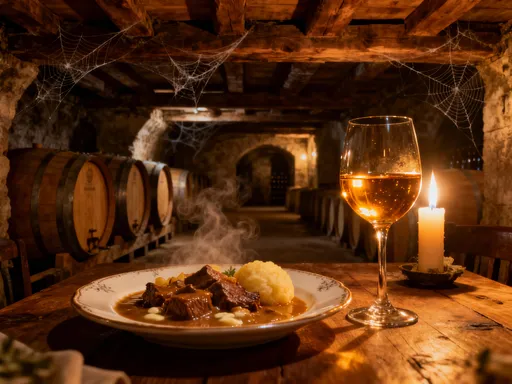
One evening, I followed a narrow alley off Jánský Vrch and found myself in a centuries-old wine cellar called Měšťanská Vinárna. The room was low-ceilinged, lit by candles, and filled with locals laughing over glasses of amber wine. I pointed at what the couple next to me was drinking, and the owner brought me a glass of Svatovavřinecké, a rare white varietal from Moravia. With it came a small plate of pickled vegetables and a slice of open-faced sandwich topped with liver pâté and onion. No menu, no prices listed—just trust and hospitality. That night, I didn’t just taste wine; I felt part of something timeless.
Another favorite was a tiny bistro in Žižkov called Lokál U Císaře. Hidden behind a plain door, it looked more like a private club than a restaurant. Inside, red-checked tablecloths, vintage posters, and the hum of conversation created a warm, lived-in atmosphere. I ordered what the man at the next table was eating: a simple plate of smoked sausage with mustard and a side of sauerkraut. It arrived on a chipped plate, but the flavors were pristine. The sausage was smoky and tender, the mustard sharp and homemade. When I tried to pay, the cashier smiled and said, 'Good choice. That’s what my father eats.' That personal connection—between food, memory, and place—is what makes these hidden spots so powerful.
Navigating these places can be intimidating, especially if you don’t speak Czech. But most owners are patient with visitors who show genuine interest. A smile, a polite 'dobrý den,' and a willingness to point at what others are eating go a long way. Many places now have picture menus or simple English translations, but even when they don’t, the experience of ordering blindly can lead to delightful surprises. And if you’re unsure, ask your hotel concierge or a local shopkeeper for recommendations. They’ll often point you to the very spots that don’t appear on tourist maps—because they’re meant to be discovered, not advertised.
Markets and Local Food Experiences
No visit to Prague is complete without a morning spent at the Naplavka Riverside Market. Every Saturday from spring to autumn, this stretch of riverbank transforms into a vibrant showcase of Czech food culture. Farmers, bakers, cheesemakers, and beekeepers set up stalls under white tents, offering everything from heirloom vegetables to handmade pastries. The air smells of wood-fired bread, roasting coffee, and wild herbs. Locals stroll with reusable bags, sampling cheeses, sniffing jars of honey, and chatting with vendors they’ve known for years. It’s not a market for souvenirs—it’s a market for living.
I arrived early, just as the first sunlight touched the water, and spent two hours tasting my way down the row. I bought a wedge of blue cheese from the Bohemian Highlands, its tangy flavor softened by a drizzle of honey from a beekeeper who keeps hives near the Šumava Forest. I picked up a loaf of sourdough rye bread, still warm from the oven, and a jar of elderflower shrub—a fermented drink that’s both refreshing and probiotic. At a coffee stand, I watched as a barista brewed a single-origin pour-over from beans roasted in Brno. Every purchase felt meaningful, connected to a person, a place, and a tradition.
The market also offers a chance to see how Prague’s farm-to-table movement is growing. More restaurants now source ingredients directly from small farms, and chefs often visit Naplavka to select produce for the week. I joined a guided food walk led by a local food historian, who explained how Czech cuisine once relied entirely on seasonal, regional ingredients before industrialization changed eating habits. Now, there’s a quiet revival—chefs are returning to those roots, and consumers are embracing them. This isn’t a trend; it’s a return to common sense.
For travelers, participating in this culture is easy. Visit the market, buy a few local specialties, and have a picnic by the river. Or take ingredients back to your Airbnb and try a simple Czech recipe—like potato pancakes or fruit dumplings. These small acts create deeper connections than any guided tour. You’re not just observing Prague—you’re living in it, eating with it, and becoming part of its rhythm.
Drinks That Complete the Meal
When people think of Czech drinks, beer is usually the first—and last—thing that comes to mind. And yes, Prague’s beer culture is legendary. The country has the highest per capita beer consumption in the world, and for good reason: Czech lager is fresh, balanced, and served with pride. But during my trip, I discovered that Prague’s drink scene is far more diverse than I expected. Wine, once overshadowed by beer, is having a renaissance. And non-alcoholic options—like herbal sodas and fermented drinks—are gaining popularity among health-conscious locals.
Czech wine might surprise you. While Moravia produces 96% of the country’s wine, Prague’s wine bars are bringing these bottles to the capital. I visited Veltlin, a minimalist wine bar in Holešovice, where the sommelier guided me through a flight of Moravian whites: Grüner Veltliner with notes of lime and white pepper, and Ryzlink Rýnský with crisp apple and floral hints. The wines were light, food-friendly, and far from the sweet, mass-produced versions some associate with Eastern Europe. Today, young Czech winemakers are focusing on organic practices, low intervention, and native varietals—creating wines that are both authentic and exciting.
Of course, beer remains a cornerstone of Czech life. But there’s a right way to drink it. The best pints are poured slowly, in stages, to create the perfect foam-to-liquid ratio. I learned this at U Fleků, one of Prague’s oldest breweries, where the server explained that a proper pour takes nearly two minutes. The result? A smooth, velvety lager with a rich aroma and clean finish. And while Pilsner Urquell is the most famous export, local breweries like Bernard and Kocour offer complex, characterful alternatives worth seeking out.
For non-drinkers, Prague offers refreshing options beyond plain soda. I became fond of fruit shrubs—vinegar-based drinks sweetened with fruit syrups—and traditional kvass, a lightly fermented beverage made from rye bread. Served cold, it’s earthy, slightly tangy, and deeply satisfying. These drinks aren’t afterthoughts; they’re part of the meal, designed to cleanse the palate and enhance flavor. Whether you choose beer, wine, or a herbal soda, what matters is that you drink it slowly, mindfully, and alongside good company.
Practical Tips for Eating Well in Prague
Enjoying Prague’s food scene doesn’t require fluency in Czech or a luxury budget—it just requires a few smart strategies. The first is knowing how to spot tourist traps. Restaurants with multilingual menus featuring photos of food, located within 100 meters of major attractions, are often overpriced and underwhelming. Instead, look for places filled with locals, especially during weekday lunches. If the menu is only in Czech, that’s usually a good sign. Watch for daily specials—'denní menu'—often offered at a fraction of dinner prices and made with fresh, seasonal ingredients.
Meal pacing in Prague is different from what many tourists expect. Lunch is the main event, typically served between 11:30 a.m. and 2:00 p.m., and can last over an hour. Dinner starts later, around 6:30 or 7:00 p.m., and is often lighter. Don’t rush through your meal like you’re ticking off a sightseeing list. Slow down. Savor. Let the food unfold. Many locals view dining as a social ritual, not a transaction. Embrace that mindset, and your experience will deepen.
Budget-friendly dining is easy if you know where to look. Tram lines 9 and 22, for example, connect central areas to residential neighborhoods where prices are lower and quality is high. A three-course lunch special in Vinohrady might cost half of what you’d pay in the Old Town. Also, consider eating at markets like Naplavka or Havelské Tržiště, where you can assemble a gourmet picnic for under 300 CZK. And don’t overlook bakeries—many double as casual lunch spots, serving soups, sandwiches, and salads made with care.
Finally, understand local customs. Tipping is customary—10% is standard if service is included, more if it’s exceptional. Reservations are recommended for popular spots, especially on weekends. And if you want to connect with locals, learn a few Czech phrases: 'Dobrý den' (hello), 'Děkuji' (thank you), and 'Chutná to' (it tastes good). These small gestures show respect and often lead to warmer service, better recommendations, and even an extra slice of dessert.
Conclusion
Eating in Prague transformed my trip from sightseeing to truly experiencing. It’s not just about full plates—it’s about connection, history, and the joy of discovery. With the right approach, every meal becomes a story. Whether you’re craving comfort or curiosity, Prague delivers. Pack your appetite—you’re in for more than you imagined.