You Won’t Believe What I Found in Halifax—A Whole New Side of Canada
I went to Halifax expecting seafood and ocean views, but what I found was so much deeper—a cultural heartbeat few travelers talk about. From historic neighborhoods buzzing with Acadian and Mi’kmaq influences to underground music scenes in converted churches, this city surprised me at every corner. It’s not just Canada’s maritime gem—it’s a living, breathing cultural mosaic. If you think you know Atlantic Canada, think again. This is real, raw, and totally underrated.
Arrival in Halifax: First Impressions Beyond the Postcard
Touching down at Halifax Stanfield International Airport, the first thing you notice is the crisp, clean air—tinged with salt and a faint hint of pine. The drive into the city reveals a landscape where water and land seem to embrace one another. The harbor, alive with fishing boats, pleasure craft, and the occasional tall ship, pulses with activity. This isn’t a staged seascape for tourists; it’s a working waterfront, where the rhythm of daily life still revolves around the tides.
Many visitors arrive with a checklist: Citadel Hill, the waterfront boardwalk, a lobster dinner. And while these are worthy experiences, they only scratch the surface. What becomes evident within hours is that Halifax is not a city preserved behind glass. It’s dynamic, layered, and evolving. The downtown core blends heritage buildings with contemporary storefronts, and the people—warm, direct, and proud—speak with a cadence that feels both familiar and distinct.
Unlike larger Canadian cities where urban sprawl can dilute identity, Halifax’s compact size amplifies its character. You can walk from a centuries-old church to a vegan café in ten minutes, passing street musicians, public art installations, and conversations in multiple languages. This blend of tradition and reinvention sets the tone for a deeper exploration—one that moves beyond postcard views to uncover the city’s authentic pulse.
The Cultural Roots: Mi’kmaq Heritage and Acadian Influence
To understand Halifax, one must begin with the land and its original stewards. The Mi’kmaq people have lived in Mi’kma’ki—what is now Nova Scotia—for over 13,000 years. Their presence is not confined to history books; it is visible in place names like K’jipuktuk (Halifax’s Mi’kmaw name), in public art installations, and in the ongoing efforts to preserve language and traditions. The Wabanaki Confederacy, of which the Mi’kmaq are a part, continues to play a vital role in shaping the region’s cultural landscape.
Visitors can engage with Mi’kmaq culture respectfully and meaningfully at spaces like the Mi’kmaq Heritage Place at the Nova Scotia Museum or through community-led events such as the annual Treaty Day celebrations in October. These are not performative displays but affirmations of identity and resilience. Artisans demonstrate traditional beadwork, elders share stories in Mi’kmaw, and youth perform traditional dances with pride. It’s a living culture, not a museum exhibit.
Equally influential is the Acadian legacy, rooted in the French-speaking settlers who arrived in the 17th century. Though many were displaced during the Great Upheaval of the 1750s, their descendants remain a vibrant part of Nova Scotia’s identity, particularly in regions like Clare and Chéticamp. In Halifax, their influence appears in bilingual signage, Acadian flag displays, and culinary traditions like raspaberry pie—a sweet-tart dessert made with rhubarb.
Seasonal festivals such as the Festival acadien de Clare bring Acadian music, food, and language to life, often featuring l’ancré—a communal meal where families gather to share stories and songs. These gatherings are not staged for tourists; they are intergenerational traditions that sustain cultural memory. Together, Mi’kmaq and Acadian influences form a foundational layer of Halifax’s identity—one that predates Confederation and continues to shape its soul.
Neighborhood Vibes: Where Culture Lives on the Streets
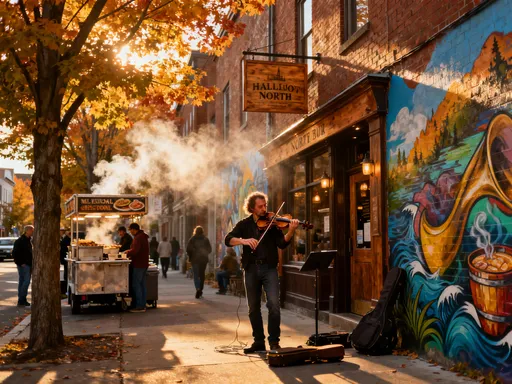
If culture is lived, not performed, then Halifax’s neighborhoods are its most honest storytellers. Nowhere is this more evident than in the North End, a historically working-class district that has become a hub of creativity and community. Walking along Gottingen Street, you’ll pass colorful murals depicting local heroes, independent bookstores with curated selections, and cafes serving injera alongside butter tarts.
This fusion isn’t accidental. For decades, the North End has been home to African Nova Scotians, whose ancestors arrived as Black Loyalists, Jamaican Maroons, or refugees via the Underground Railroad. Their contributions to music, cuisine, and civic life are woven into the neighborhood’s fabric. Institutions like the Black Cultural Centre for Nova Scotia honor this legacy, preserving artifacts, oral histories, and artistic expressions that might otherwise be overlooked.
At the same time, the area has seen an influx of young professionals, artists, and immigrants, leading to a delicate balance between revitalization and displacement. New coffee shops and art galleries coexist with longstanding community centers and churches. Gentrification is a real concern, but so is community pride. Residents are actively involved in shaping development, advocating for affordable housing, and ensuring that new businesses reflect the neighborhood’s values.
Across the harbor in Dartmouth, Alderney Landing offers another glimpse into local life. This waterfront complex hosts farmers’ markets, live music, and public art, drawing people from all over the region. On summer evenings, families gather for free concerts, children play by the water, and food trucks serve everything from poutine to jerk chicken. It’s a space designed for gathering, not spectacle—a place where culture unfolds naturally, one conversation at a time.
Music That Moves the City: From Kitchen Parties to Live Venues
In Halifax, music isn’t just entertainment—it’s a language. The sound of fiddles, accordions, and bodhráns echoes through pubs, community halls, and even grocery store aisles. Traditional East Coast music, rooted in Scottish, Irish, and Acadian traditions, is alive and evolving. You don’t need to attend a formal concert to experience it. Some of the most memorable performances happen in unassuming places: a backroom in The Old Triangle Irish Alehouse, a basement in a community center, or someone’s living room during a kitchen party.
Kitchen parties—informal gatherings where music, food, and storytelling flow freely—are a cherished Maritime tradition. They’re not staged for visitors; they’re how locals connect. If you’re lucky enough to be invited, you’ll find yourself shoulder-to-shoulder with neighbors, tapping your foot to reels and jigs, maybe even joining in a singalong of The Hockey Song or Song for the Mira. There’s no spotlight, no ticket price—just shared joy.
For more structured experiences, venues like The Rebecca Cohn Auditorium and The Seahorse Tavern offer professional performances that still feel intimate. One unforgettable evening took place at St. Mary’s Basilica, where a local ensemble transformed the sacred space into a concert hall for an evening of Celtic fusion. The acoustics were breathtaking, the music stirring—a reminder that Halifax treats its heritage not as a relic, but as a living art form.
Music here is also a tool for storytelling. Songs recount shipwrecks, migrations, and everyday struggles with humor and heart. Artists like Ashley MacIsaac and The Barra MacNeils have brought Maritime music to global audiences, but at home, it remains grounded in community. Radio stations like CKDU 88.1 FM support local musicians, and festivals like the Halifax Folk Festival prioritize accessibility and inclusivity. In a city where weather can isolate, music brings people together—note by note, story by story.
Taste of Place: Food as Cultural Expression
To eat in Halifax is to taste history, geography, and community. While lobster rolls and fish and chips are staples, they’re just the beginning. Nova Scotian cuisine is defined by its relationship to the land and sea, shaped by generations of Mi’kmaq, Acadian, British, and African Nova Scotian traditions. It’s a cuisine of resourcefulness, seasonality, and deep flavor.
A visit to the Halifax Seaport Farmers’ Market offers a sensory introduction. Open since 1750, it’s the oldest continuously operating farmers’ market in North America. Here, you’ll find fishermen selling fresh halibut, farmers offering heirloom potatoes, and bakers crafting rugelach alongside blueberry grunt—a sweet dessert made with wild berries and dumplings. Artisans sell seaweed-based seasonings, a nod to Mi’kmaq culinary practices, while immigrant vendors introduce flavors from Ethiopia, Lebanon, and the Caribbean.
One standout experience is trying herring roe on kelp, a traditional Mi’kmaq dish that showcases the region’s bounty. The roe, bright orange and briny, is laid on dried kelp and lightly grilled, creating a delicate, umami-rich bite. It’s not always on restaurant menus, but it appears at cultural events and community feasts—another example of food as heritage.
Game meats like moose sausage, when available, reflect the province’s inland forests and hunting traditions. Served with brown butter and root vegetables, it’s hearty and deeply satisfying. Meanwhile, Acadian dishes like fricot—a chicken and dumpling stew—warm the soul on damp Atlantic evenings. Even modern restaurants like Bar Kismet and The Canteen reinterpret these traditions with creativity and respect, using hyper-local ingredients and sustainable practices.
Dining in Halifax is rarely just about the meal. It’s about who grew the food, who caught the fish, and who shared the recipe. Chefs often introduce themselves at tables, farmers greet regulars by name, and menus list the origins of ingredients. This transparency fosters trust and connection, turning meals into moments of cultural exchange.
Seasonal Rhythms: How the Year Shapes Cultural Life
Halifax’s cultural life is deeply attuned to the seasons. The maritime climate—mild summers, long winters, and unpredictable springs—shapes how people gather, celebrate, and create. In winter, when the days are short and the wind bites, the city turns inward. Storytelling nights, kitchen parties, and cozy pub sessions become essential. The darkness isn’t something to endure; it’s a space for reflection, music, and closeness.
Community centers host mummering events, a tradition borrowed from Newfoundland where people dress in disguise and visit homes for food and song. Libraries offer storytelling circles featuring Mi’kmaq elders and Acadian poets. Even the annual Deep Roots Festival, though held in summer, plans year-round workshops that keep traditional crafts and music alive during colder months.
When spring arrives, so does renewal. Gardens are planted, boats are launched, and outdoor markets reopen. The city sheds its winter coat gradually, like a bear waking up. By summer, Halifax pulses with energy. The Halifax Jazz Festival transforms the waterfront into a stage for local and international artists, blending bebop with Celtic rhythms. The Nova Scotia Multicultural Festival celebrates over 150 cultural communities with food, dance, and music from around the world.
Even weather delays—common during stormy Atlantic summers—are met with patience and humor. A canceled outdoor concert might become an impromptu jam session in a nearby pub. A rainy market day leads to deeper conversations under tents. There’s a resilience here, born of living close to the elements, that infuses cultural life with authenticity and adaptability.
Why Halifax Changes How You See Canadian Culture
Most international visitors picture Canada as mountains, maple syrup, and polite urbanites in Toronto or Vancouver. Halifax challenges that narrative. It is a cultural crossroads where Indigenous, French, British, and African Nova Scotian heritages intersect in ways that are both subtle and profound. This isn’t a city that performs diversity; it lives it, breathes it, and builds from it.
What makes Halifax special is its scale. Unlike major tourist hubs, where culture can feel commodified, here it remains accessible and intimate. You can meet a Mi’kmaw artist at a market, hear a fiddler in a pub, or chat with a fisher at a breakfast diner—all in a single day. There’s no barrier between “local” and “visitor.” The city welcomes engagement, not observation.
Smaller cities like Halifax often preserve authenticity better than their larger counterparts. Without the pressure of mass tourism, communities have space to define their identity on their own terms. Traditions aren’t shortened for stage shows; they’re practiced in homes, halls, and hearts. This isn’t to say Halifax is untouched by change—far from it. But the pace allows for thoughtful evolution, not erasure.
For travelers, this means an opportunity to slow down, listen, and connect. It means trading checklists for conversations, sightseeing for presence. It means understanding that culture isn’t something you consume—it’s something you participate in. Halifax doesn’t just offer experiences; it invites belonging.
And perhaps that’s the most powerful shift: realizing that Canadian culture isn’t monolithic. It’s not just hockey and politeness. It’s the sound of a fiddle in a Dartmouth church basement, the taste of seaweed on your plate, the sight of a mural honoring Black Nova Scotian leaders. It’s layered, resilient, and deeply human.
Halifax isn’t just a stopover—it’s a story told in accents, flavors, and rhythms you won’t hear anywhere else in Canada. By stepping off the beaten path and into its neighborhoods, you don’t just visit—you connect. This city reminds us that culture isn’t performed; it’s lived. And once you feel it, you’ll want to return, not for the sights, but for the soul.